1

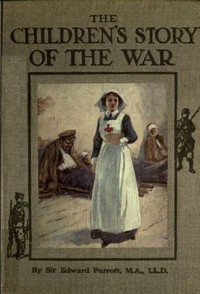
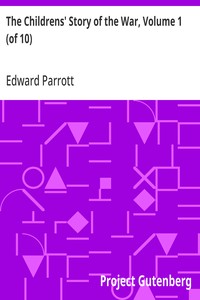
The Children's Story of the War Volume 4 (of 10) The Story of the Year 1915 — Background and Themes
16
2
Project Gutenberg
2011
World War, 1914-1918 -- Juvenile literature
Readers of public-domain and historical texts
Project Gutenberg digital edition
en
Edition facts
Words: 129,341
Reading time: 563 min
Text sections: 17
Source:
Project Gutenberg record #35386
Examines Sir Edward Parrott's 1916 children's history of 1915's Great War, focusing on authorial choices in diction, dialogue, and description. Observations trace how Parrott balances factual narration with heroic vignettes, uses direct address to young readers, and employs vivid sensory details to render trench warfare and naval battles accessible without graphic horror.
Editorial Edition Score
4.9/5
★★★★★
★★★★★
Calculated from edition completeness, EPUB availability, text structure and catalogue metadata. Not a user rating.
Edition quality
Sir Edward Parrott's The Children's Story of the War Volume 4 (1916) covers the year 1915 through a lens that is both instructional and inspirational. Written for a juvenile audience during the conflict itself, the book adopts a direct, conversational tone—"I am going to tell you the story"—that positions the author as a trusted guide. Parrott frequently interjects explanatory asides, such as calling the old Ypres salient "such a silly thing," a phrase that reveals his effort to simplify complex military geography for young minds. The narrative blends factual chronology with dramatic set-pieces, often quoting soldiers' reported speech or highlighting acts of individual bravery, like Captain Ralston's stand with three men.
Direct Address and the Authorial Voice
Parrott consistently uses the second-person pronoun "you" to engage his reader directly. The opening sentence of Chapter I sets this pattern: "In this volume I am going to tell you the story of the war as it unfolded itself during the year 1915." This technique creates an intimate, tutorial relationship between author and audience. He also employs rhetorical questions and commands—"You can form some idea of the skill with which this retirement was conducted"—to guide the reader's interpretation. The authorial voice is confident and occasionally moralizing, as when he praises the Royal Army Medical Corps as having "covered itself with glory." Such phrasing reinforces the book's dual purpose: to inform and to inculcate patriotic values.
Vivid Sensory Description of Trench Warfare
Parrott renders the physical reality of the trenches through concrete, sensory details. In the account of the Ypres salient, he describes men "stumbling over sand-bags, tripping over heaps of blown-in earth, and falling over their dead comrades." The accumulation of tactile and visual images—sand-bags, earth heaps, dead bodies—creates a palpable sense of chaos and exhaustion. He also notes the heat of rifles: "their rifles were too hot to hold." Such details ground the narrative in bodily experience, making the abstract concept of battle tangible for a young reader. At the same time, Parrott avoids graphic descriptions of wounds or death, maintaining a tone suitable for children while still conveying the grimness of war.
Heroic Anecdotes and Reported Speech
The book is structured around discrete, dramatic anecdotes that highlight individual courage. Parrott frequently incorporates reported speech or interior perspective, as when he writes that Captain Ralston and his men "bluffed" the Germans by firing from different points. The phrase "bluffed" is notably colloquial, suggesting Parrott's effort to make military tactics relatable. He also includes direct quotations from soldiers, such as the remark that the old salient "was such a silly thing." These snippets of dialogue lend authenticity and immediacy. The anecdote of Private Lynn winning the Victoria Cross by keeping his gun in action "while enveloped in the deadly gas" exemplifies how Parrott uses specific, named individuals to embody larger themes of sacrifice and duty.
Navigating the Boundaries of Fact and Narrative
Parrott walks a careful line between historical accuracy and narrative shaping. He acknowledges the incompleteness of his account—"I could fill many pages with stories of men who did miracles of heroism"—while still selecting episodes that serve his didactic purpose. The book's structure, with chapters on specific battles (Neuve Chapelle, Festubert, Loos) interspersed with thematic sections like "Stories from the Battlefield," reveals a deliberate alternation between overview and anecdote. Parrott also uses poetic epigraphs, such as William Collins's "How sleep the brave," to frame the narrative with a tone of solemn remembrance. This blend of factual reporting and literary framing suggests that the book aims not only to record events but to shape how young readers remember the war.
Parrott's volume offers a window into how the Great War was presented to contemporary children: as a series of heroic vignettes embedded in a clear chronological framework. Readers should attend to the author's choices in diction—the colloquial asides, the direct address, the sensory details—that distinguish this work from adult histories. The book's episodic nature means it can be read in sections, each self-contained story illuminating a different facet of 1915's campaigns. By focusing on individual acts of courage, Parrott transforms the vast machinery of war into a human-scale narrative, one designed to instruct and inspire its young audience.
Reader reflection
How did this book work for you?
Your answers remain private and are stored only in this browser.
Your progress
0
/
10
2
Was reading this book enjoyable?
3
Is this a title you would suggest to others?
4
How demanding did the text feel?
5
Is this a title worth rereading?
6
How valuable was this book for your own interests?
7
Did any part of the book feel personally relevant?
8
Would this book work well in a reading group?
9
In one sentence, what did you learn?
10