1

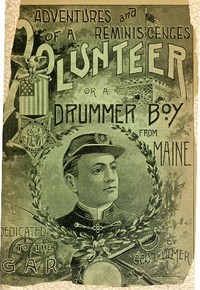
Adventures and Reminiscences of a Volunteer; Or, A Drummer Boy from Maine — Reading Companion
20
2
Project Gutenberg
2010
United States -- History -- Civil War, 1861-1865 -- Personal narratives
Readers of public-domain and historical texts
Project Gutenberg digital edition
en
Edition facts
Words: 23,947
Reading time: 105 min
Text sections: 3
Source:
Project Gutenberg record #32246
A Civil War memoir by a Maine drummer boy who enlisted young, recounting camp debates, near-capture, and his blunt opinions on generals. The preface disclaims heroism and literary polish, offering a plain-spoken soldier's perspective.
Editorial Edition Score
4.6/5
★★★★★
★★★★★
Calculated from edition completeness, EPUB availability, text structure and catalogue metadata. Not a user rating.
Edition quality
George T. Ulmer opens his 1892 memoir with a disclaimer: he does not intend to write a history of the rebellion, nor does he claim heroic deeds, since "most of the heroes of the war were killed." Instead, he promises a "truthful account of an unimportant career" in "homely, rugged, commonplace language." The excerpts bear this out. Ulmer describes himself as a barefoot New York newsboy who shouted "Fort Sumter Bombarded!" to sell papers before his family moved to a hilly Maine farm. He enlisted young and became the "midget orator of the Army of the Potomac," arguing strategy around campfires. The catalog subject—"United States -- History -- Civil War, 1861-1865 -- Personal narratives"—fits, but the excerpts reveal a voice less concerned with grand tactics than with the absurdity and terror of a boy in uniform.
A Self-Aware Narrator, Not a Hero
Ulmer's preface sets a deliberate tone: he expects no glory and jokes that writing the book might get him killed for audacity. This self-deprecation continues in the excerpts. When a shell explodes near his company, he runs "on the dead run for the rear," then fears he has stumbled into Confederate lines. He finds two "big Johnnies" behind a hen-house who ask for food. The scene is comic and vulnerable—Ulmer is "most scared to death"—and he does not edit out his panic. The catalog label "personal narrative" is accurate, but the excerpts show a memoir that leans into embarrassment and luck, not battlefield prowess.
Campfire Debates and Opinions on Command
Ulmer portrays himself as a talkative soldier who "kept posted on facts and the topography of the country." He criticizes generals who were selected "not for their qualifications in military tactics alone" but for pluck and honesty. He singles out Custer's brigade as wasting time on minor operations. In one campfire scene, Colonel McArthur asks what he would do if given supreme command. Ulmer replies he would take Richmond quickly with a dream team of generals—Grant, Sherman, Sheridan, Custer, and others—prompting cheers. The excerpt reveals a young man with strong, if naive, strategic opinions, and a regiment that indulged his debates. This is not a standard personal narrative of suffering; it is a record of a soldier who argued politics and tactics.
The Drummer Boy's Voice and Audience
Ulmer dedicates the book to the Grand Army of the Republic and addresses "some of his comrades" who might recall similar incidents. The excerpts show him as the "midget" of the regiment, called upon for oratory. His language is colloquial: he "needed money" selling papers, he "forgave himself" for false shouts, and he "made up his mind" he was inside rebel lines. The catalog subject "biography-memoir" fits, but the excerpts emphasize a specific readership—fellow veterans who would recognize the mix of fear, humor, and opinion. Ulmer does not claim to represent all soldiers; he offers one "unimportant career" as a way to introduce himself as a comrade.
Readers should approach this memoir as a deliberately unpolished account. Ulmer warns that dates may be approximate and that he is not writing a history. The excerpts reward attention to his voice—self-mocking, opinionated, and occasionally terrified. His criticisms of generals and his campfire debates are as central as the combat scenes. The book is best read as a personal artifact of how one young soldier remembered the war, not as a comprehensive narrative.
Reader reflection
What did you think of this book?
Answer a few questions and save a private reflection on this device.
Your progress
0
/
10
2
How much did you enjoy the reading experience?
3
How likely are you to recommend this book?
4
How demanding did the text feel?
5
How valuable was this book for your own interests?
6
What did you think about the pace?
7
Would a second reading be valuable?
8
How personally connected did you feel to the book?
9
In one sentence, what did you learn?
10