
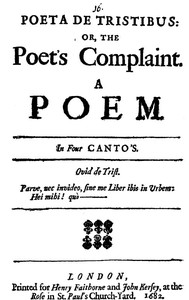
Poeta de Tristibus; Or, The Poet's Complaint by Anonymous
Let's set the scene: London, 1680. A small, unassuming book is published. The title page simply says 'Poeta de Tristibus; Or, The Poet's Complaint' and where the author's name should be, there's nothing. Just 'Anonymous.' This isn't a marketing gimmick; it's the central wound of the poem itself.
The Story
The poem is a dramatic monologue from a poet who has died and is now suffering in a gloomy, classical-style underworld. He's not being punished for a crime; his punishment is oblivion. His work has faded, his name is gone, and he's consumed by bitterness. He directly addresses the living, accusing us of neglect and painting vivid, miserable pictures of his eternal, fame-less torment. He lists all the things he's lost—his lute is broken, his laurels withered—and all because we didn't remember him. The plot is his emotional journey from sorrow to raging anger, a one-sided argument with a world that has already moved on.
Why You Should Read It
Forget dusty old poetry. This thing has a pulse. The anonymity isn't a lack; it's a presence. You're not reading a poem by Anonymous; you're reading a poem about being Anonymous. That shift changes everything. The poet's voice is so raw and specific in his complaints that you start to wonder about the real person behind the words. Was this a famous writer's private fear? A struggling poet's final, prophetic shot? That layer of real-history mystery makes every line land harder. It explores that universal, gut-churning fear: does anything we do actually matter? It's about art, legacy, and the quiet terror of being erased.
Final Verdict
This is a book for the curious and the contemplative. It's perfect for readers who love historical deep-dives, for fans of gothic mood and tragic, theatrical voices (think Hamlet if he were a forgotten scribe). It's also surprisingly great for modern poetry readers who appreciate conciseness and sheer emotional force. It’s short, so there's no commitment, but I warn you—it sticks. You'll find yourself thinking about that angry, invisible poet, and maybe, looking a little closer at the names on the spines of your other books.
This title is part of the public domain archive. Share knowledge freely with the world.
Jessica Rodriguez
1 year agoThis is one of those stories where the emotional weight of the story is balanced perfectly. Absolutely essential reading.
Joseph White
9 months agoI have to admit, the emotional weight of the story is balanced perfectly. A true masterpiece.
Daniel Ramirez
3 months agoVery interesting perspective.
Steven Anderson
1 year agoText is crisp, making it easy to focus.


George Davis
10 months agoExceptional clarity on a very complex subject.